
Believers, not consumers: the power of shared commitment
Faster, faster, faster. Faster and faster. Life has accelerated so much that pauses and silences have almost disappeared. At first it shocked me, but then it became normalized for me to start listening to WhatsApp audios at 1.5x speed.
It was natural for me to listen to them at 2x. It became so natural to “speed up” life, that when I wanted to listen to one at 1 it seemed strange, even uncomfortable.
The last few years have been dizzying.
It was necessary to reach everything, to try to be in everything, to read everything, to look at everything. Everything as a utopia because it is unfeasible, if not impossible, to cover everything.
FOMO (Fear Of Missing Out) became vintage next to RA (Reach All).
As an observer of the dynamics of social transformations, I noticed with interest and concern how the number of people increasing the speed of reproduction was growing.
But not only WhatsApp audios but also series, movies, audiobooks or podcasts.
Does it reflect the obsession to optimize time, I wondered.
But if you can’t stop to enjoy a series, or listen to a good interview, or the audio of someone near and dear to you, are we optimizing or wasting time?
This strange fashion of listening to or watching everything at twice the speed is a clear sign of these fast, anxious, accelerated, impatient times.
And this new practice, now normalized in so many areas, has consequences.
In my case, it led me to have a worse and worse relationship with patience and time.
That “everything” that I mentioned before was unsettling for me. To such an extent that it was like living on top of a Formula 1 and everything that did not go at that speed generated stress in me. What an irony.
Many psychologists confirm what I thought, or felt, people get bored later in real life, which goes at normal speed.
This rare trend, a child of the digital age, of “doing everything in less time” has reached content platforms of all kinds and more and more are choosing a speed of 1.5x.
The number of so-called fasters is growing every day.
In my book TOTEM I developed a chapter on the culture of immediacy. I described how almost all content, from movies to series, from books to music albums, became shorter and shorter in relation to the last decades.
But fast-paced life is no longer just about content.
We want to know what the other person is telling us as quickly as possible, so that we can answer him/her right away and continue doing other things.

Is it about squeezing the most out of life by missing out?
This kind of growing “movement”, that of the faster people, leads us to ask ourselves what kind of society we want to live in.
When series, audios and life go at their natural pace, faster people get bored. They have the feeling that everything seems too slow and this has some direct consequences: they disconnect in conversations, they find it difficult to have a continuous attention, they get anxious, they pick up their cell phones and get distracted.
Impatience is compatible with the fact that they are used to overstimulation and everything tastes too little to them.
And those of us who have suffered from it know that when stimulation is reduced, it generates a bit of withdrawal syndrome.
Life, over the years, seems to go by faster.
A month of life at 25 is very different than at 50. One seems like an eternity, the other a snap of the fingers.
So why accelerate what will naturally accelerate?
The reasons for speeding up could be reflecting that obsession to optimize, to do more (not better) in less time. As if we had also self-imposed this ‘obligation’ to be up to date, to consume everything, all content, without giving up anything and the faster the better, series, podcasts, audiobooks.
What are we left with if everything is going so fast?
What happens is that in this desire to consume faster and faster, part or all of the message can be lost.
When we press the 1.5x or 2x button and speed up the WhatsApp audio, for example, we eliminate the pauses, silences, accent, intonation and intention that the language itself often has. This could be missing important details that the other person wanted to communicate or transmit to us.
According to different sources, our brain harbors up to 4 different types of memory:
1-Sensory memory
2-Short-term memory (Working memory)
3-Long-term memory (Explicit memory. Implicit memory)
4-Retrograde memory
Working memory is the system that influences the ability to store and manipulate information over a short period of time. Short-term memory stores information temporarily, while working memory is responsible not only for storing but also for processing information.
There are researchers who confirmed that distractions through phone use and apps such as WhatsApp were decreasing working memory, also decreasing learning efficiency.
Constant changes in technology have contributed to a way of life based on multitasking and constant limited attention.
Therefore, although a priori, the fact that we increase the speed at which we listen to audios is not something serious, it is true that in some way it can change our working memory, that is, how we process information.
Interpersonal communication through smartphones has become an integral part of our daily lives.
Today’s reality of anytime, anywhere availability demands that more than one task be tackled at the same time.
Multitasking is defined as the ability to maneuver between tasks or as the ability to perform more than one task sequentially. Recent changes in our lives, brought about by technology, have contributed to a way of life based on multitasking and constant limited attention.
We mistakenly believe that we have the capacity to perform different tasks requiring attention in parallel, that we are capable of managing such communication. However, we control neither the place nor the time at which we receive messages.
We are unaware of the price we pay when your attention is divided.
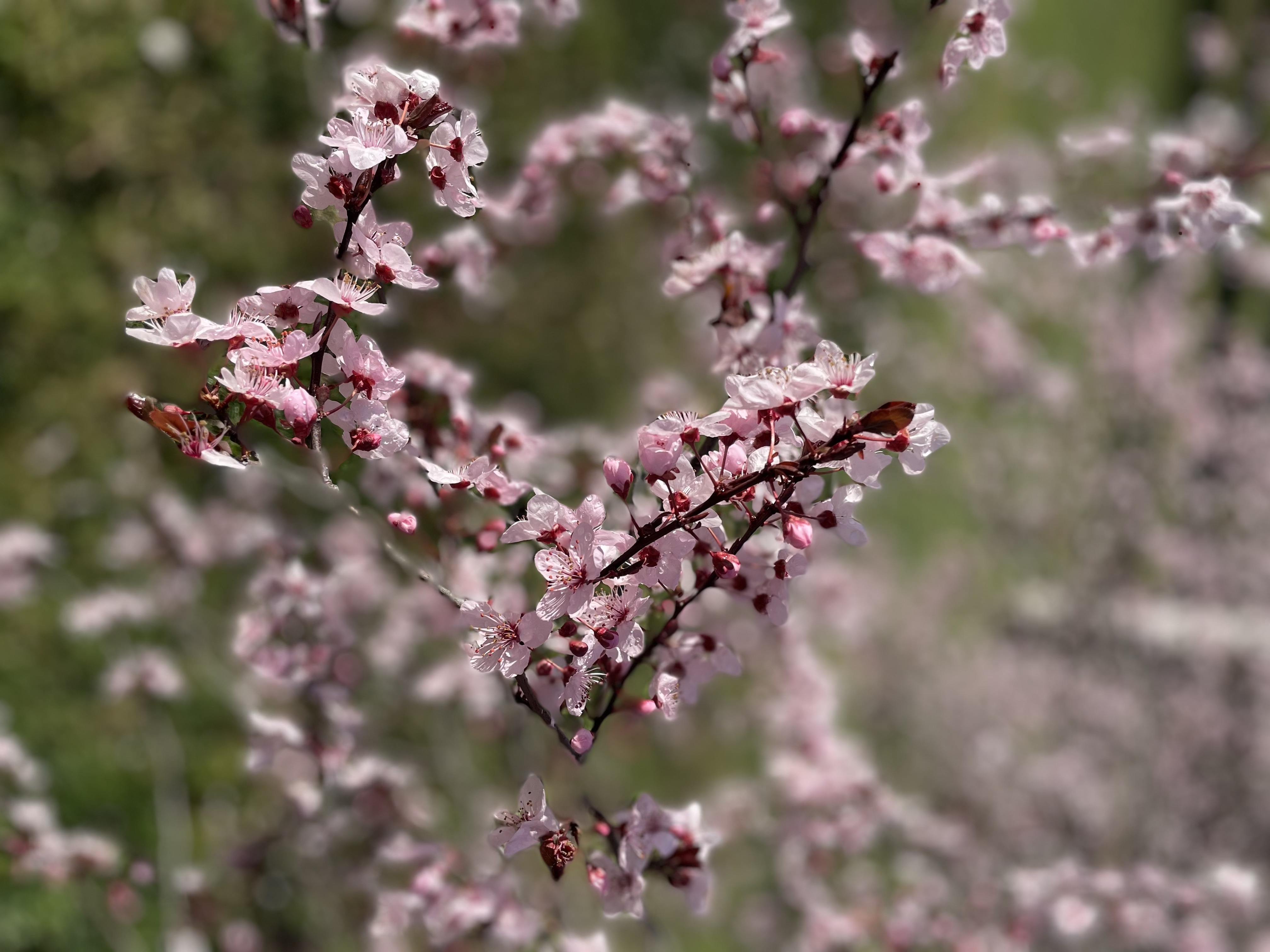
This morning, on my way to work, I stopped for a while in the park in front of the TOTEM Headquarters. Spring was coming in the northern hemisphere and I was excited to see the first blossoms of the almond trees.
The sun was rising and a few drops of dew rested on the leaves of other trees. Some small birds drank from them and then flew away.
The grass was wet and the sky was light blue.
I was able to enjoy the pause, the silence, the moment.
No need to speed up life, on the contrary, wondering how to slow it down as it slipped through my fingers.
I write to you when I have something to tell you.
Get an email every time I publish something new.
Your email will only be used to send you what I publish. Privacy policy
Related posts


