
What is Share of Life and why is it changing how we measure brands?
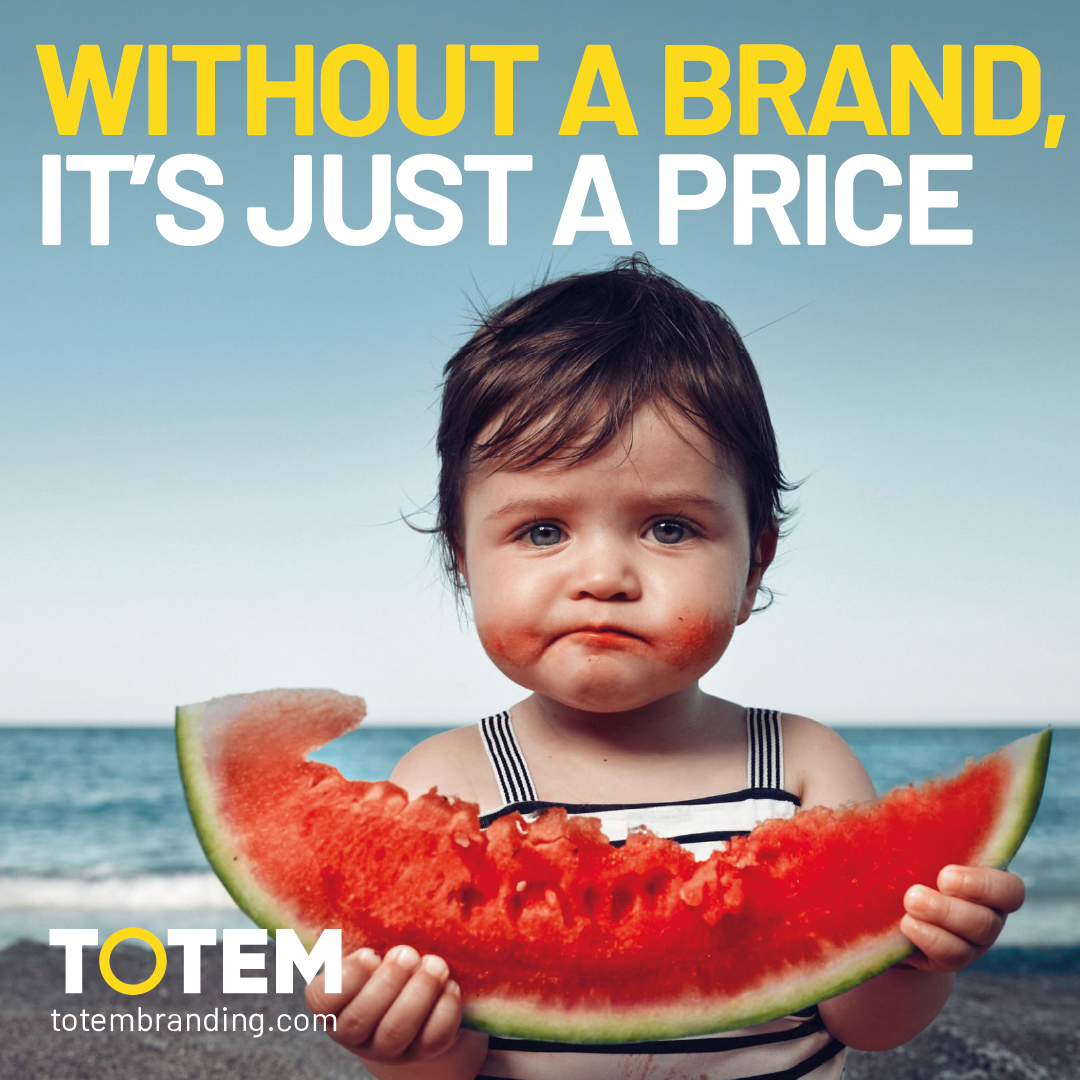
There’s a big difference between wanting to be an important brand and being a brand that does things that matter. It’s almost the difference between being a well-known brand and a beloved brand. The former leads to behavior, the latter to commitment. The more information and data we have, the more we confirm what the world’s most valuable brands have in common.
As we approach the end of an intense year, we can confirm that a brand becomes valuable when it ceases to be just another option and becomes a reason to choose. Nothing new under the sun, you might be thinking. The truth is, what is new is that more and more leaders, businesspeople, investors, and entrepreneurs are already embracing this as an irrefutable fact.
When a brand solves a problem, inspires confidence, accompanies a habit, or represents a way of being in the world, it ceases to occupy only a place in the market; it begins to occupy a place in people’s lives.
We’ve evolved from a product-centric scenario to a customer-centric one. And from there, with a leap into the future, to a life-centric scenario.
That’s the job of branding . It’s not about finding a catchy phrase or dressing up a product with an attractive identity. It’s about building a relationship between what an organization promises, what it does, and what people experience. A relationship that’s expressed in communication, but also in the product, the service, the culture, the experience, the technology, the relationships, and everyday decisions.
That’s why the most valuable and reputable brands don’t share a formula. They share a capacity: to be important in a way that others can’t easily imitate . Some become infrastructure; others solve a problem with extraordinary clarity; others become part of a habit. Some grow by expanding; others, by knowing what not to change.
A brand is not what an organization says about itself. It’s the meaning people construct from what it does, how it treats them, and the experience it leaves with them.
The definition that best explains it is that a brand is what people say, feel, think, share, about your product, service, company, organization, and all the etceteras.
TOTEM Branding ‘s approach : aligning strategy, culture, identity, and experience so that the brand is not only recognizable, but relevant and credible.
Infrastructure, habit, or response
There are brands that sell products. And there are brands whose relevance transcends the product because they make other things possible.
NVIDIA represents this second class. Its importance lies not only in the chips it sells, but also in its position within the technological infrastructure necessary to develop and deploy artificial intelligence applications . When a brand becomes part of the conditions that allow a category to exist, its place changes: it stops competing solely for preference and begins to occupy a central position in the system.
Other brands grow because they become a habit. YouTube , Instagram , and Netflix play a role in how people discover, learn, are entertained, converse, and follow culture. Their relevance doesn’t depend solely on being remembered at the moment of purchase; it depends on people returning to them to do something that’s already part of their lives.
There are also brands that succeed by solving a specific problem better than others. UNIQLO offers functional clothing with a clear proposition; Booking.com helps compare and organize trips; Uber reduces friction in transportation. They don’t do the same thing or compete in the same category, but they understand a consumer need and organize a significant part of their business around it.
These are different paths to relevance. A brand can be infrastructure, habit, or response. The strategic question is not to pursue all three at once, but to understand what role it can credibly play and what capabilities it must build to sustain it.
Each category grows differently.
Talking about “the fastest-growing brands” might lead you to think there’s a single driving force. There isn’t. The way to generate value depends on the category, the behavior you want to address, and the expectations of your audience.
In technology , growth can come from enabling new capabilities and becoming infrastructure, as is the case with NVIDIA . In retail , it can depend on trust, price, availability, or the consistency of the experience. In tourism , the brand must reduce uncertainty across a series of moments: inspiring, comparing, booking, traveling, and resolving unforeseen issues. In luxury , expansion can destroy value if it dilutes exclusivity or contradicts the codes that make the brand desirable.
UNIQLO demonstrates how a clear value proposition can expand into other markets without losing recognition. In Kantar’s 2026 Japanese BrandZ ranking, its value grew by 80% in two years, reaching $24.6 billion. Kantar attributes this growth to international expansion, consistent quality, and its LifeWear brand.
In the discount retail sector, Aldi and Lidl illustrate another approach: making savings seem like a sensible decision, without sacrificing trust or perceived quality. Brand Finance notes that the combined value of discount brands has grown at nearly three times the rate of the large traditional retailers analyzed since 2023. The lesson is not that all brands should compete on price, but rather that value is a holistic perception: it includes how much you pay, what you receive, and how much confidence the choice inspires.
In the food sector, a shift in the composition of growth is also evident. Brand Finance highlights that innovation, health, convenience, and trust are gaining ground compared to growth primarily driven by price increases. Nestlé , for example, increased its brand value by 23% in 2026. This figure alone doesn’t explain the cause, but it aligns with a consumer who expects more than just a familiar product: they want it to remain relevant to their current needs.
In tourism, Booking.com and Hilton build value at different stages. One brand facilitates search, comparison, and booking; the other must sustain a hospitality experience through properties and services. Brand Finance ranks Booking.com as the most valuable leisure and travel brand, with 16% growth projected for 2026, while Hilton’s hotel brand value increased by 28%. In both cases, the experience must confirm the promise through a sequence of interactions, not a single advertisement .
A country’s brand requires a different approach. It’s not simply an expanded tourism campaign: it’s shaped by culture, institutions, services, infrastructure, sustainability, and genuine experiences. Spain ranked third in the World Economic Forum’s Travel & Tourism Development Index 2026, an index that assesses the conditions for developing tourism, not the country’s overall reputation or the value of its national brand. These metrics shouldn’t be confused, but together they help us understand that attractiveness also depends on concrete capabilities.
The automotive industry is undergoing a transition that cannot be summarized as a victory of one technology over another. Brand Finance forecasts a 7% drop in the aggregate value of automotive brands by 2026. Toyota maintained its leadership in value and strength, although its value fell by 3%; BYD increased by 23%. According to Kantar BrandZ, BYD grew by 41% and reached fifth place among the most valuable automotive brands. These figures come from different sources and are not directly comparable, but they reflect a redistribution of positions in a sector affected by electrification, trust, price, scale, and differences between markets.
And luxury reminds us that growth can also mean preservation. Hermès has built value through the coherence of craftsmanship, product, distribution, price, and experience. Ferrari can extend its universe into experiences and lifestyle, but this expansion only strengthens the brand if it maintains a clear connection to its core values of performance, design, and exclusivity. The lesson is not “diversify to grow”; it’s about earning the right to diversify .
When the promise goes into the product
Trust is born when a promise withstands the test of reality. A brand can talk about purpose, innovation, or care; what matters is whether those ideas change what it offers and how it behaves.
AXA France added support coverage to its home insurance policies for victims of domestic violence who needed to relocate to a safe place. The “Three Words” campaign made the change visible, but the real promise lay in the service, not just the marketing. According to WARC, during its first year the initiative supported 1,576 people, increased net new contracts by 113%, and propelled the brand from second to first place in customer consideration.
IKEA made the durability of its furniture something people could investigate directly on the product. Instead of asking the public to believe a claim, it offered a way to find proof.
These cases illustrate the difference between stated purpose and delivered value . Purpose can guide decisions, but it becomes credible when it modifies an offering, improves an experience, or helps solve a specific need. Creativity isn’t an add-on layer for the business; it can contribute to transforming it and making that change visible.
This is one of the reasons why strategic branding cannot be reduced to mere communication. A promise that doesn’t influence the product, service, or culture risks remaining just talk. A promise that becomes an experience begins to build trust.
The community is not an audience
Reputation is built in an open environment. Customers, employees, creators, and communities are not just recipients of messages; they also influence what others think and feel about a brand.
In the 2026 Global RepTrak 100 , LEGO held the top spot for the fourth consecutive year, while adidas climbed to second. These results don’t prove that a specific campaign caused the improvement. They indicate that reputation depends on multiple factors: the product, conduct, employee experience, innovation, and the company’s relationship with its stakeholders.
LEGO is a powerful example because participation is part of the product experience. People build, combine, imagine, and share. The community doesn’t feel like a tactic overlaid on the brand; it grows from something people can do with it and with each other.
Therefore, building community isn’t about gathering followers and asking them to amplify messages. It’s about creating reasons to participate, recognizing people, and fostering a relationship that extends beyond mere transactions. A brand can facilitate community; it cannot claim ownership of it.
Distributed reputation does not eliminate the organization’s responsibility. The company continues to make decisions, act, and communicate; it simply no longer alone controls the meaning of its actions. Communication can explain behavior, but it cannot replace it.
What rankings don’t tell us
Rankings help us observe trends, but they don’t provide a complete explanation. Kantar BrandZ combines consumer research and financial analysis to estimate the value a brand brings to a business. Interbrand assesses a brand’s role in the purchase decision and its competitive strength. RepTrak measures corporate reputation. Each study illuminates a distinct dimension, and their figures shouldn’t be combined as if they were a single measurement .
Kantar estimates that the 100 most valuable global brands in its ranking will reach $13.1 trillion in 2026, a 22% increase over the previous year. Google returned to the top spot and grew by 57%; ChatGPT recorded the largest annual increase in value, at 285%.
In contrast, the growth of NVIDIA , Instagram , YouTube , and Netflix cited by Interbrand corresponds to its 2025 edition: NVIDIA grew by 116%, Instagram entered the Top 10, YouTube increased by 61%, and Netflix by 42%. LEGO ‘s leadership and adidas ‘ rise are from RepTrak 2026. These are complementary results, but from different years, using different indicators and methodologies.
Rankings alone don’t explain what specific experience led to growth, what internal decisions made it possible, or how long it will last. They don’t allow us to conclude that an increase in value automatically equates to more trust, a better reputation, or greater social impact. To understand growth, we need to cross-reference the data with product, experience, distribution, culture, price, and competitive context.
Its usefulness lies in helping to formulate better questions: which brands have become more necessary?, what promise have they managed to turn into an experience?, what habit or relationship do they maintain?, what difference can the public recognize and what capacity does the company have to maintain it?
What can we learn?
- Visibility is not the destination. A brand can be well-known but not preferred; it can generate attention without building trust. The goal is for attention to translate into choice and a relationship.
- Growth drivers vary by category. Technology, retail, tourism, automotive, and luxury do not build value in the same way. Each brand must identify its own source of relevance.
- Solving a specific problem remains a powerful advantage. A clear proposal makes it easier for the customer to choose and helps the organization prioritize.
- Artificial intelligence should enhance a recognizable experience. Integrated meaningfully, it can create utility; used as decoration, it can widen the gap between discourse and reality.
- The promise must be embodied in the product. The cases of AXA and IKEA show that a brand gains credibility when an idea becomes a service, trial, or experience.
- Consistency is not stagnation. It allows for innovation and expansion without diluting what makes the brand valuable.
- Community is not the same as audience. It implies participation, belonging, and reasons for people to connect with each other and with the brand.
- Reputation is built through daily use. A campaign can spark a conversation; repeated experience determines whether trust endures.
- Brand and business must be measured together. Value, reputation, preference, and recommendation should be considered alongside retention, frequency, sales, and quality of experience.
In an environment where artificial intelligence makes producing messages increasingly easy, the scarce resource will not be the ability to communicate. It will be the ability to be credible . That’s why branding needs to connect strategy, culture, identity, and experience; in other words, treat the brand as a living system, not as a mere layer of communication. This is also the conviction that underpins TOTEM Branding ‘s approach .
And here the circle closes. A brand begins to create value when it ceases to be just another option and becomes essential to someone. It might be essential because it enables an industry, because it solves a problem clearly, because it’s part of a habit, or because it maintains exceptional consistency. When that importance is demonstrated time and again, value and reputation cease to be mere objectives in a ranking.
They become the consequence of a well-constructed relationship.
I write to you when I have something to tell you.
Get an email every time I publish something new.
Your email will only be used to send you what I publish. Privacy policy
Related posts


